Secure Access: SASE and Identity-Driven Access
Replace Implicit Trust with Identity-driven, Secure Access Everywhere.
Secure access replaces implicit network trust with identity-driven controls. Blue Mantis implements and manages SASE, runs identity and access management, and protects servers and endpoints, so access decisions follow the user and device rather than the network location they happen to sit in.
-
Identity-based access control -
Zero Trust architecture aligned -
Unified networking and security -
Reduced lateral movement risk
What Blue Mantis Delivers in Secure Access
Blue Mantis helps modernize how users, systems, and devices access applications and data across cloud, network, and endpoint environments.
SASE Implementation & Management
Blue Mantis modernizes secure access by integrating networking and security into a unified cloud-delivered model. We enable consistent protection and access control across users, locations, and applications.
What Blue Mantis covers
- Unified network and security architecture: Integrates SD-WAN and security controls into one platform.
- Zero Trust Network Access enforcement: Validates every access request based on identity and context.
- Cloud-delivered secure access model: Protects users accessing internet, SaaS, and private applications.
- Ongoing management and optimization: Maintains performance and security posture as environments evolve.
Covers
SASESD-WANZTNAZero TrustSecure Access
Identity & Access Management
Blue Mantis secures identities as the primary control point for access, ensuring only authorized users, systems, and AI tools can reach applications and data. As organizations adopt agentic AI, identity becomes the foundation for safe, governed AI usage, not just human access.
What Blue Mantis covers
- Centralized identity platform management: Supports Entra ID, Active Directory, Okta, and other identity providers.
- Secure multi-factor authentication: Enforced through Microsoft Entra ID and Microsoft 365 security defaults.
- Pre-deployment permission cleanup: Reviews existing access before AI tools are introduced, so AI cannot surface content users should not reach.
- Shadow AI visibility: Identifies unsanctioned AI tool usage through Microsoft Defender for Cloud Apps, bringing unmanaged adoption into governed visibility.
Covers
IAMEntra IDMFAShadow AI
Server & Endpoint Protection
Blue Mantis protects servers and endpoints against threats while ensuring systems remain patched, monitored, and resilient against vulnerabilities. We extend protection across distributed environments.
What Blue Mantis covers
- Endpoint detection and response coverage: Detects and responds to threats across devices.
- Extended detection and response integration: Correlates signals across endpoints, identities, and environments.
- Patch and vulnerability management: Reduces exposure by addressing known security gaps.
- Server protection and monitoring: Secures critical infrastructure against threats and misuse.
Covers
EDRXDREndpoint ProtectionPatch ManagementServer Security
What happens at each step
How Secure Access Modernization Works
Step 1
Assess Access and Identity Gaps
We evaluate identity systems, access controls, and remote connectivity models. This identifies where implicit trust, inconsistent policies, and exposure exist.
Step 2
Design Zero Trust Architecture
Access models are redesigned around identity, device posture, and context. This ensures continuous verification replaces static trust models.
Step 3
Implement Secure Access Controls
Technologies such as SASE, IAM, and endpoint protection are deployed to enforce access consistently. This reduces attack surface and limits unauthorized access.
Step 4
Monitor and Optimize Access Security
Access patterns, identity behavior, and endpoint risk are continuously monitored. This ensures controls adapt as users, devices, and threats evolve.
Managed Cybersecurity Services
Mantis Protect Is How Blue Mantis Delivers Managed Cybersecurity
Managed cybersecurity services cover the work most teams cannot staff around the clock: continuous monitoring, threat detection, investigation and response. Without that coverage, even well-chosen tools leave gaps that surface at the worst possible moment.
Mantis Protect is the Blue Mantis managed cybersecurity program. It brings 24×7 monitoring, detection and response together with the compliance and testing work that surrounds it, so one team is accountable for the outcome instead of a set of disconnected tools.
24×7 MonitoringThreat DetectionIncident ResponseManaged SIEMThreat HuntingExposure ManagementSecurity ExpertsCompliance SupportSecurity Operations
| Common Challenges | How Mantis Protect Helps |
|---|---|
| Limited visibility into threats across your environment | ✓Continuous monitoring and threat detection |
| Security alerts overwhelming internal teams | ✓Expert triage and investigation support |
| Difficulty responding to incidents quickly | ✓24×7 response guidance and escalation |
| Lack of round-the-clock security coverage | ✓Always-on protection from a dedicated security team |
| Keeping up with evolving compliance requirements and audit demands | ✓Continuous GRC expertise without adding headcount |
Frequently Asked Questions
What is SASE and how does it differ from a VPN?
SASE combines networking and security into one cloud-delivered model, and it differs from a VPN by validating every access request rather than granting broad network trust. Blue Mantis integrates SD-WAN and security controls into one platform, enforces Zero Trust Network Access based on identity and context, and protects users reaching internet, SaaS, and private applications.
What does identity and access management cover?
Identity and access management covers who and what can reach your applications and data. Blue Mantis manages centralized identity platforms including Entra ID, Active Directory, and Okta, enforces multi-factor authentication through Microsoft Entra ID and Microsoft 365 security defaults, cleans up existing permissions before AI tools are introduced, and surfaces shadow AI usage through Microsoft Defender for Cloud Apps.
How does zero trust apply to remote workers?
Zero trust applies to remote workers by tying access to identity and device posture instead of network location. Blue Mantis enforces Zero Trust Network Access so every request is validated on identity and context, and endpoint protection keeps devices patched and monitored. Access patterns, identity behavior, and endpoint risk are monitored continuously so controls adapt as users and devices change.
What is shadow AI and how do we know if it's a risk in our organization?
Shadow AI is unsanctioned or unmanaged AI tool adoption happening outside approved governance and controls, often because teams cannot wait for IT approval. It creates risk around data leaks, policy violations, and third-party exposure. Blue Mantis identifies shadow AI usage through Microsoft Defender for Cloud Apps, giving you visibility into what is actually running before it becomes a governance gap.
Can this be implemented without replacing current systems?
Yes. Secure Access services are designed to integrate with existing identity, network, and endpoint tools. The goal is to modernize and align controls, not require a full replacement on day one. Blue Mantis assesses identity systems, access controls, and remote connectivity first, then aligns SASE, identity, and endpoint controls to what you already run.
See where access creates risk in your environment.
We will evaluate your identity, network, and endpoint access controls to identify where exposure exists. You leave with a clear plan to modernize access and reduce risk.
Related Resources
Datasheet
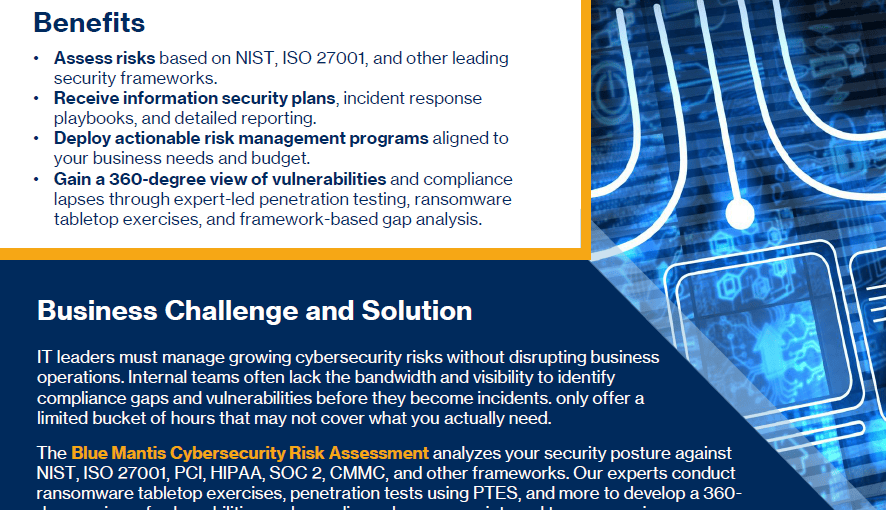
Hybrid workforces, cloud environments, and mobile devices create an expanding attack surface that internal teams struggle to monitor objectively. Reactive security is no longer enough.
Blog
This is not alarmism. It is a description of a gap that is now quantifiable, sourced, and closing in the wrong direction.