
Managed Cybersecurity Operations (SOC)
Centralize Protection, Detection, and Compliance in One Managed Program.
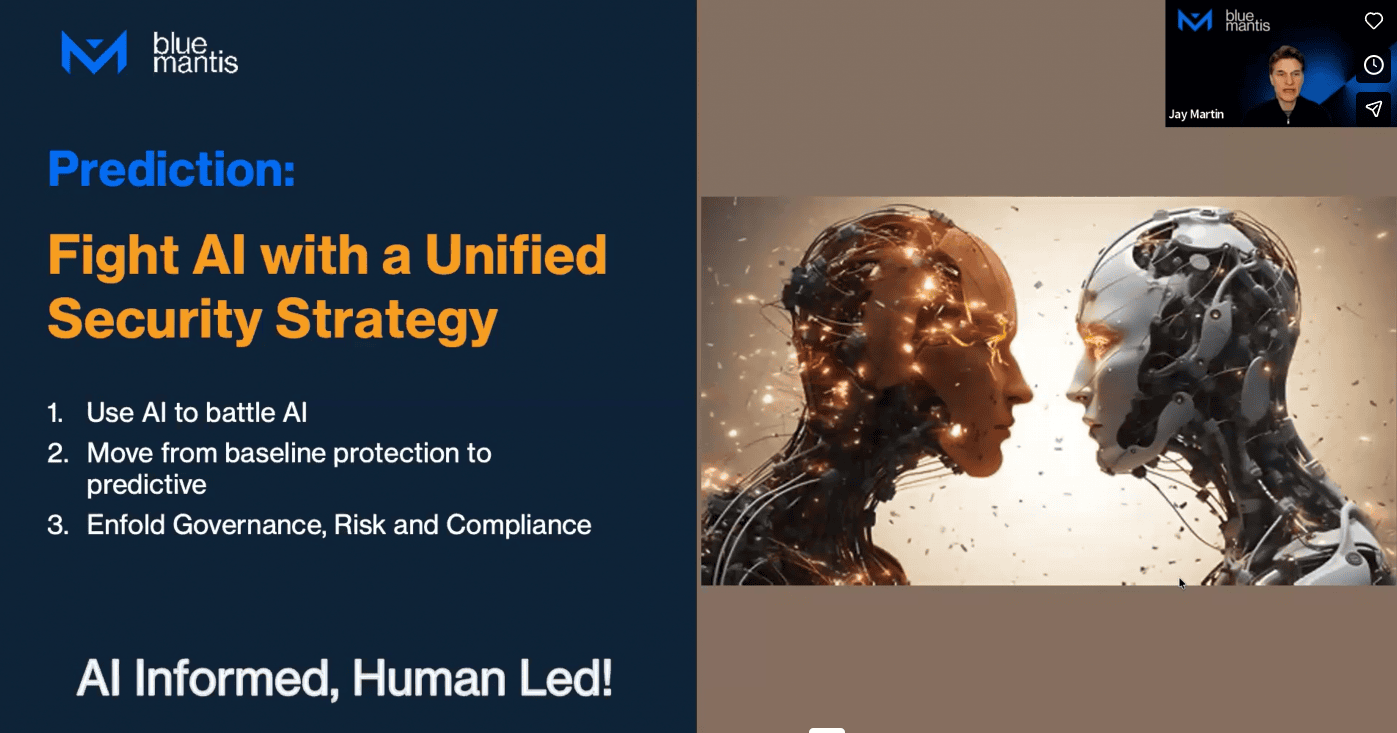
Managed cybersecurity operations centralizes protection, detection and compliance in one program. Blue Mantis delivers baseline security operations, unifies tooling and telemetry into a single view, and moves the program from reactive defense toward proactive and predictive detection and response.
-
24x7 analyst-led monitoring -
AI-informed threat detection -
Modular services that scale -
Audit-ready reporting support
What Blue Mantis Delivers in Managed Cybersecurity Operations
Blue Mantis helps you scale from foundational protection to unified operations, proactive security, and managed compliance. Organizations can start with one layer or build a more complete program over time.
Baseline Cybersecurity Operations
This tier handles the security functions most organizations know they need but struggle to run consistently. It reduces avoidable exposure across identity, email, endpoints, user behavior, and credential leakage while taking repetitive security work off your internal team.
What Blue Mantis covers
- Email threat filtering: Blocks phishing, malware, and account takeover attempts before they reach users.
- Managed MFA enforcement: Strengthens identity assurance and reduces risk tied to stolen or weak credentials.
- Endpoint and XDR coverage: Extends malware and ransomware protection across user devices and monitored assets.
- Security awareness operations: Keeps user training, campaigns, and program follow-through active without adding work to IT.
Covers
Email SecurityManaged MFAEDR/XDRSecurity AwarenessDark Web
Unified Cybersecurity Operations
This tier brings monitoring, investigation, and vulnerability insight into one managed operating model. It is designed for organizations that need stronger visibility, real prioritization, and 24×7 response without standing up their own security operations center.
What Blue Mantis covers
- 24×7 MDR coverage: Provides around-the-clock monitoring, triage, and response support for live threats.
- Threat investigation workflow: Connects alert validation, analyst review, and escalation into a single flow.
- Vulnerability prioritization: Focuses remediation on exposures that materially increase operational and compliance risk.
- Executive-ready reporting: Delivers dashboards and summaries leadership can use to understand posture and progress.
- Centralized security operations: Brings detection, visibility, and response together instead of leaving tools siloed.
- Dark web exposure monitoring: Alerts on leaked credentials or sensitive business information tied to your organization.
Covers
MDR24×7 SOCVulnerability ManagementPrioritizationResponse
Proactive and Predictive Security Operations
This tier is built for organizations that want to find hidden risk before attackers or auditors do. It adds threat hunting, offensive validation, and strategic advisory support that helps mature the program beyond alert response and routine monitoring.
What Blue Mantis covers
- Threat hunting activities: Investigates subtle indicators of compromise that automated alerts can miss.
- Offensive security testing: Validates how real-world attack paths could impact your environment and priorities.
- AI red teaming: Tests AI-related controls, workflows, and exposures as adoption expands across the business.
- Risk-informed advisory: Uses findings to sharpen decision-making, remediation plans, and longer-term security investments.
- Continuous maturity improvement: Helps move the program from reactive operations to more adaptive security outcomes.
Covers
Threat HuntingOffensive SecurityAI Red TeamingRisk ReductionAdvisory
What happens at each step
How Managed Cybersecurity Operations Works
Step 1
Scope the Environment
We start by understanding your environment, current controls, business priorities, and risk drivers. This creates a practical starting point so coverage matches what actually needs protection.
Step 2
Establish the Baseline
Foundational controls are put in place or aligned, including identity, endpoint, email, awareness, and exposure monitoring. This closes obvious gaps first and reduces day-to-day risk fast.
Step 3
Centralize Detection and Response
Security signals, alerts, and vulnerability data are brought into a unified managed operating model with 24x7 oversight. This improves visibility, sharpens prioritization, and shortens the path from detection to action.
Step 4
Expand Into Proactive Resilience
Once core operations are stable, the program extends into threat hunting, offensive validation, and continuous compliance management. This helps you move from reactive defense to a more mature, risk-informed security posture.
Mantis Protect
MSSP and MDR Are Table Stakes. Mantis Protect Is Built for What Comes Next.
Security tools are only part of the equation. Organizations today face increasingly sophisticated threats, limited internal resources, and around-the-clock risk. Without continuous monitoring and expert response capabilities, even the strongest security investments can leave critical gaps.
Mantis Protect extends your security team with 24×7 monitoring, threat detection, incident response, and expert guidance. Whether you’re strengthening defenses, improving compliance, or reducing pressure on internal teams, Mantis Protect helps you stay ahead of evolving cyber threats with always-on protection.
24×7 MonitoringThreat DetectionIncident ResponseManaged SIEMThreat HuntingExposure ManagementSecurity ExpertsCompliance SupportSecurity Operations
| Common Challenges | How Mantis Protect Helps |
|---|---|
| Limited visibility into threats across your environment | ✓Continuous monitoring and threat detection |
| Security alerts overwhelming internal teams | ✓Expert triage and investigation support |
| Difficulty responding to incidents quickly | ✓24×7 response guidance and escalation |
| Lack of round-the-clock security coverage | ✓Always-on protection from a dedicated security team |
| Keeping up with evolving compliance requirements and audit demands | ✓Continuous GRC expertise without adding headcount |
Frequently Asked Questions
What does a managed SOC do?
A managed SOC monitors your environment, investigates alerts, and coordinates response so your internal team does not have to run those functions itself. Blue Mantis provides 24×7 MDR coverage, a threat investigation workflow that connects alert validation, analyst review, and escalation, vulnerability prioritization, and executive-ready reporting. Detection, visibility, and response are centralized instead of left siloed across tools.
What is the difference between MDR and a managed SOC?
MDR is one part of a managed SOC. MDR provides around-the-clock monitoring, triage, and response support for live threats, while Blue Mantis managed cybersecurity operations wraps that in a broader operating model. That model covers baseline controls such as email threat filtering, managed MFA, and endpoint coverage, plus vulnerability prioritization, executive-ready reporting, and optional threat hunting and offensive testing.
How quickly should a security operations team respond to an alert?
Response time depends on what the alert represents, which is why triage and prioritization matter as much as raw speed. Blue Mantis provides 24×7 monitoring, so alerts are reviewed when they arrive rather than waiting for business hours. A threat investigation workflow connects alert validation, analyst review, and escalation, and vulnerability prioritization focuses effort on exposures that materially increase operational and compliance risk.
How is this different from buying another security tool?
This is an operating model, not just another product. You get managed coverage across foundational controls, detection and response, vulnerability prioritization, and compliance support, all coordinated as one service. Most organizations do not fail from lack of tools, they fail from fragmented execution. This service helps turn disconnected technologies into an actual security program.
Do we have to replace our current security stack?
No. Managed Cybersecurity Operations can work alongside existing investments and is designed to improve how they are monitored, prioritized, and operationalized. The goal is to centralize visibility and action, not force a rip-and-replace decision on day one. If there are gaps or underperforming tools, those can be addressed as part of the service roadmap.
See what a unified managed security program should cover.
We will walk through your current security operations, identify where coverage is fragmented, and show you where baseline protection, 24×7 operations, proactive security, or GRC support fit best. You leave the conversation with a clear view of priorities, scope, and next steps.

Related Resources
Datasheet
Hybrid workforces, cloud environments, and mobile devices create an expanding attack surface that internal teams struggle to monitor objectively. Reactive security is no longer enough.

Blog
This is not alarmism. It is a description of a gap that is now quantifiable, sourced, and closing in the wrong direction.