
Cloud Security Services
Expose Cloud Risk Before It Turns Into Business Impact.
Cloud security exposes risk before it becomes business impact. Blue Mantis assesses M365 critical security controls, runs cloud security posture assessment and remediation, designs secure migration architecture, and implements data security posture management across cloud estates.
-
CIS-aligned control validation -
Identity and data risk focus -
Multi-cloud visibility coverage -
Prioritized remediation roadmap
What Blue Mantis Delivers in Cloud Security Services
Blue Mantis gives you visibility into cloud configuration, identity, and data risk, then turns the findings into a prioritized remediation plan.
M365 Critical Security Controls Assessment
Blue Mantis evaluates your Microsoft 365 tenant against CIS-aligned security benchmarks and industry best practices. We focus on the identity, email, collaboration, and data configurations attackers most often exploit.
What Blue Mantis covers
- CIS-aligned control validation: Evaluates tenant configuration against proven security benchmarks.
- Identity and access analysis: Reviews Entra ID roles, MFA enforcement, and privilege controls.
- Workload security review: Assesses Exchange, SharePoint, Teams, and Copilot configurations.
- Gap analysis with remediation: Identifies vulnerabilities and delivers prioritized fixes.
Covers
M365Microsoft 365CIS BenchmarksSecurity AssessmentEntra ID
Cloud Security Posture Assessment & Remediation
Blue Mantis evaluates cloud environments for misconfigurations, vulnerabilities, and compliance gaps across platforms like Azure and AWS. We focus on improving visibility into cloud risk and ensuring controls are properly configured.
What Blue Mantis covers
- Configuration risk identification: Finds misconfigured services that increase exposure.
- Multi-cloud posture visibility: Evaluates security across Azure, AWS, and hybrid environments.
- Compliance alignment validation: Maps controls to frameworks and internal requirements.
- Prioritized remediation guidance: Focuses on fixing the most critical issues first.
Covers
CSPMCloud PostureAzureAWSMisconfiguration
Cloud Migration & Security Architecture
Blue Mantis ensures cloud migrations are designed with security and cost built in from the start. It addresses architecture, identity models, governance controls, and the financial case for migration, so decisions are grounded in both risk and ROI.
What Blue Mantis covers
- Secure architecture design: Aligns cloud environments to Zero Trust and least privilege principles.
- FinOps cost-benefit assessment: Evaluates initial and ongoing costs against potential savings, with certified FinOps practitioner support across M365, Azure, and SaaS/IaaS licensing.
- Migration risk reduction: Identifies dependencies and vulnerabilities before migration execution.
- Strategic roadmap: Combines security architecture and financial impact into a single phased migration plan.
Covers
Cloud MigrationFinOpsSecurity ArchitectureZero Trust
Data Security Posture Management
Blue Mantis focuses on understanding where sensitive data lives, how it is exposed, and how it is governed across cloud environments. We help organizations reduce risk tied to oversharing, misclassification, and compliance gaps.
What Blue Mantis covers
- Sensitive data discovery: Identifies where regulated or business-critical data resides.
- Exposure and access analysis: Evaluates sharing, permissions, and data access patterns.
- Data governance alignment: Maps data controls to compliance and business requirements.
- Risk prioritization: Focuses remediation on high-impact exposure scenarios.
Covers
Posture ManagementCloud DataGovernanceSensitive DataCompliance
What happens at each step
How Cloud Security Services Work
Step 1
Inventory Cloud Assets
We identify cloud workloads, identities, configurations, and data flows across your environment. This establishes a complete view of what needs to be protected before making risk decisions.
Step 2
Evaluate Security Controls
Your environment is assessed against CIS-aligned benchmarks, best practices, and real-world attack patterns. This highlights configuration gaps, access risks, and weak controls that increase exposure.
Step 3
Identify and Prioritize Risk
Findings are ranked based on business impact, not just technical severity. This ensures teams focus on the exposures that matter most to operations, compliance, and data protection.
Step 4
Deliver Remediation Plan
You receive a clear roadmap with prioritized recommendations and practical next steps. In many cases, high-risk gaps are remediated during the engagement to accelerate risk reduction.
Managed Cybersecurity Services
Mantis Protect Is How Blue Mantis Delivers Managed Cybersecurity
Managed cybersecurity services cover the work most teams cannot staff around the clock: continuous monitoring, threat detection, investigation and response. Without that coverage, even well-chosen tools leave gaps that surface at the worst possible moment.
Mantis Protect is the Blue Mantis managed cybersecurity program. It brings 24×7 monitoring, detection and response together with the compliance and testing work that surrounds it, so one team is accountable for the outcome instead of a set of disconnected tools.
24×7 MonitoringThreat DetectionIncident ResponseManaged SIEMThreat HuntingExposure ManagementSecurity ExpertsCompliance SupportSecurity Operations
| Common Challenges | How Mantis Protect Helps |
|---|---|
| Limited visibility into threats across your environment | ✓Continuous monitoring and threat detection |
| Security alerts overwhelming internal teams | ✓Expert triage and investigation support |
| Difficulty responding to incidents quickly | ✓24×7 response guidance and escalation |
| Lack of round-the-clock security coverage | ✓Always-on protection from a dedicated security team |
| Keeping up with evolving compliance requirements and audit demands | ✓Continuous GRC expertise without adding headcount |
Frequently Asked Questions
What is cloud security posture management?
Cloud security posture management is the practice of evaluating cloud environments for misconfigurations, vulnerabilities, and compliance gaps, then fixing what is found. Blue Mantis reviews posture across Azure, AWS, and hybrid environments, identifies misconfigured services that increase exposure, and maps controls to frameworks and internal requirements. Findings are returned as prioritized remediation guidance so the most critical issues are addressed first.
How do you secure a Microsoft 365 tenant?
Blue Mantis evaluates the tenant against CIS-aligned security benchmarks and industry best practices, focusing on the identity, email, collaboration, and data configurations attackers most often exploit. That includes reviewing Entra ID roles, MFA enforcement, and privilege controls, and assessing Exchange, SharePoint, Teams, and Copilot configurations. The assessment ends with a gap analysis and a prioritized set of fixes.
What is DSPM and how is it different from CSPM?
DSPM, or data security posture management, focuses on the data itself: where sensitive data lives, how it is exposed, and how it is governed. CSPM focuses on how cloud services are configured and looks for misconfigurations that increase exposure. Blue Mantis delivers both, using sensitive data discovery, access and sharing analysis, and risk prioritization on the data side.
Why start with an assessment instead of jumping to tools?
Tools solve specific problems, but without knowing what your environment looks like and where the actual gaps are, you risk investing in the wrong controls. An assessment establishes a clear picture of your cloud security posture first, so recommendations are grounded in what is actually present and missing, not assumptions.
What makes cloud security different from traditional security?
Cloud environments are dynamic, identity-driven, and shared-responsibility models where misconfigurations, not just malware, are the primary risk. Traditional perimeter defenses do not translate directly. Cloud security requires continuous visibility into how identities, permissions, data, and services are configured and interact with each other.
See where your cloud environment is exposed.
We will review your cloud platforms, identity controls, and data exposure points to identify where risk exists. You leave with a prioritized plan to strengthen security and support secure cloud growth.

Related Resources
Datasheet
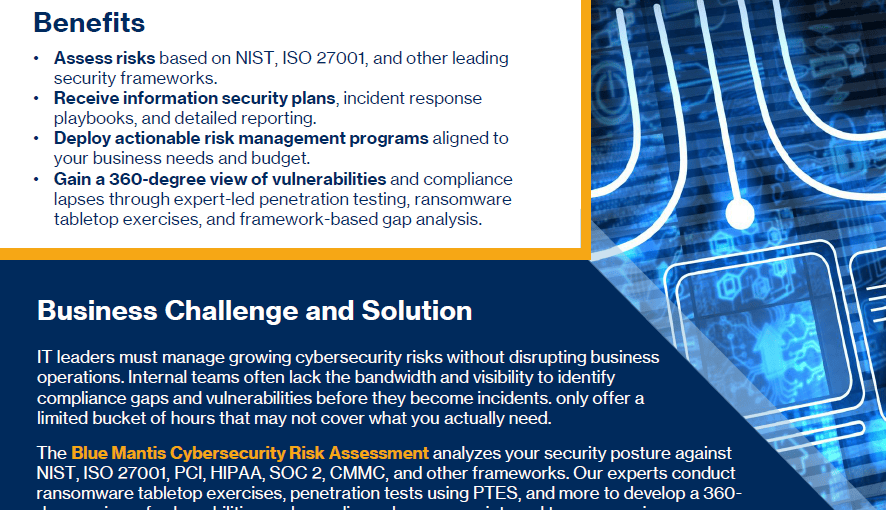
Identify and remediate common and unknown vulnerabilities attackers use to infiltrate your Microsoft 365 environment based on CIS security controls.

Blog
This is not alarmism. It is a description of a gap that is now quantifiable, sourced, and closing in the wrong direction.