Unified Communications and UCaaS
Bring Every Conversation Onto a Modern Communications Platform
Unified communications brings every conversation onto one modern platform. Blue Mantis delivers cloud calling, meetings and messaging, and contact center capability as a managed service, so voice, video and chat run on shared infrastructure rather than separate systems bolted together.
-
Modernize business communications -
Reduce platform complexity -
Improve employee connectivity -
Support hybrid work models
What Blue Mantis Delivers in Unified Communications and UCaaS
Unified Communications combines voice, meetings, messaging, contact center capabilities, and platform management into a connected communications experience.
Cloud Calling
Replace traditional phone systems with flexible cloud-based calling capabilities that support employees wherever they work. Modern cloud voice simplifies administration while improving reliability and scalability.
What Blue Mantis covers
- Cloud voice modernization: Replace aging PBX and phone infrastructure.
- Flexible workforce connectivity: Support users across locations and devices.
- Centralized call management: Simplify administration and operations.
- Scalable communications architecture: Adapt to changing business requirements.
Covers
VoiceCallingTelephonyCloudHybrid Work
Meetings & Messaging
Employees need seamless communication tools to collaborate effectively. Meetings and Messaging solutions improve teamwork while reducing reliance on disconnected communication platforms.
What Blue Mantis covers
- Integrated communication experiences: Unify conversations and collaboration.
- Meeting experience optimization: Improve engagement and productivity.
- Persistent team communications: Keep employees connected and informed.
- Cross-platform collaboration support: Simplify how teams work together.
Covers
MeetingsMessagingTeamsCollaborationProductivity
Contact Center
Customer interactions require modern tools that support responsiveness, visibility, and service quality. Contact Center solutions help organizations improve customer experiences while streamlining agent operations.
What Blue Mantis covers
- Modern customer engagement platforms: Improve communication experiences.
- AI-enabled agent productivity: Leverage chatbots, voice bots, and virtual agents to automate routine inquiries and support self-service.
- Communication analytics and reporting: Provide operational visibility.
- Scalable customer support infrastructure: Support business growth initiatives.
Covers
Contact CenterCustomer ExperienceAnalyticsSupportService
What happens at each step
How Unified Communications Works
Step 1
Assess Current Communications
Blue Mantis evaluates voice systems, collaboration platforms, communication workflows, and operational requirements. This identifies gaps, inefficiencies, and opportunities for modernization.
Step 2
Develop a Communications Strategy
Blue Mantis designs a roadmap that aligns communications technology with business objectives, workforce needs, and operational requirements. This creates a clear path from legacy systems to a modern platform.
Step 3
Migrate and Modernize
Voice, messaging, meetings, and collaboration capabilities are consolidated onto a unified platform. Careful planning minimizes disruption and accelerates user adoption.
Step 4
Optimize and Support
Communications performance, user experience, adoption, and platform capabilities are continuously improved. This ensures the investment continues delivering value as business needs evolve.
The Difference: One Team For Every Carrier
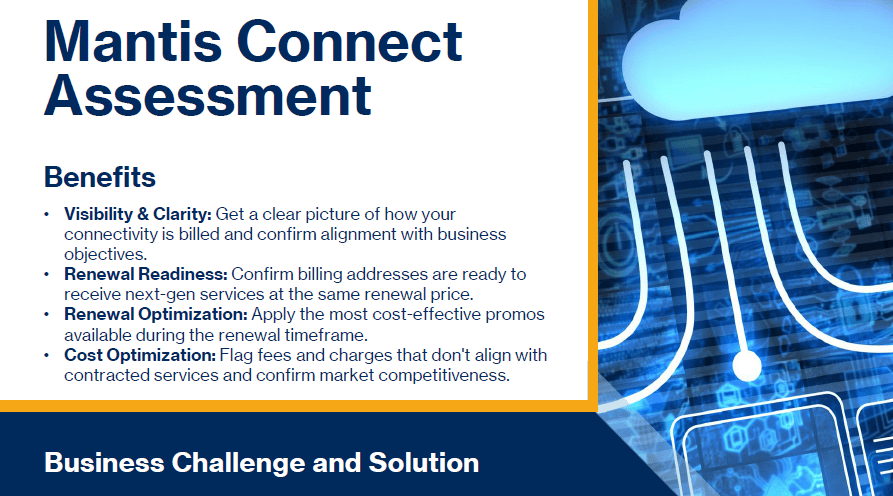
Mantis Connect: connectivity without complexity
Connectivity and telecom run around 30% of total IT spend and underpin daily operations, yet most organizations lack the time and expertise to validate carrier billing every month. Mantis Connect is your single-source carrier solution, unifying sourcing, procurement, installation, and billing so you are always connected to your network, your people, and your data.
15–30%average carrier cost savings› 90%reduction in ongoing time spent managing telecom‹ 2%client churn rate
DIAEPLLTE / 5GVoIPPOTSSAT
One team. One solution. One call.
What Mantis Connect Covers
- ✓Network & Telecom Health CheckA full telecom bill review before any recommendations, clear findings, no surprises.
- ✓Carrier Sourcing & ProcurementBest-fit carriers sourced and compared side by side, we handle the paperwork and orders.
- ✓Managed InstallationsFully coordinated installs, with the first bill verified against your quoted price.
- ✓Managed DisconnectsReplaced services cancelled, we chase the carrier until credits are applied.
- ✓Ongoing Telecom ManagementMonthly bill audits and finance-ready reports across every asset and location.
Frequently Asked Questions
What is UCaaS and how does it differ from VoIP?
UCaaS is unified communications delivered as a cloud service, bringing voice, video, messaging, meetings, and collaboration together on one platform. VoIP is narrower and covers voice calling carried over an internet connection. Blue Mantis replaces aging PBX and phone infrastructure with cloud calling, then consolidates messaging, meetings, and collaboration onto the same platform with centralized call management.
Can Microsoft Teams replace a business phone system?
Yes, in many environments. Cloud calling replaces aging PBX and phone infrastructure, and voice can run on the same platform employees already use for meetings and messaging, including Microsoft Teams. Blue Mantis assesses current voice systems, collaboration platforms, and communication workflows first, then designs a roadmap that consolidates calling, messaging, and meetings with centralized call management.
What does a managed contact center include?
A managed contact center brings customer interactions onto a modern engagement platform and keeps that platform running afterward. Blue Mantis includes AI-enabled agent productivity, using chatbots, voice bots, and virtual agents to automate routine inquiries and support self-service. Communication analytics and reporting provide operational visibility, infrastructure scales with growth, and ongoing support improves performance, experience, and adoption.
Can Unified Communications support hybrid work?
Yes. Unified Communications platforms are designed to give employees consistent access to communication and collaboration tools regardless of location. Users can place calls, join meetings, send messages, and collaborate from virtually anywhere. This creates a more flexible and productive work environment. Organizations benefit from a more resilient communications strategy.
What should organizations consider before modernizing communications?
Organizations should evaluate existing communications infrastructure, business requirements, workforce needs, user experience goals, and integration requirements. A detailed assessment helps identify the most effective modernization path. Successful projects balance technology capabilities with adoption planning and operational readiness. The goal is to improve communications without creating unnecessary disruption.
Make Every Business Conversation Easier to Manage
Blue Mantis communications specialists will assess your voice environment, collaboration tools, user experience, and communications strategy to identify opportunities for modernization. You will receive a roadmap for creating a more connected, productive, and scalable communications platform.
Related Resources
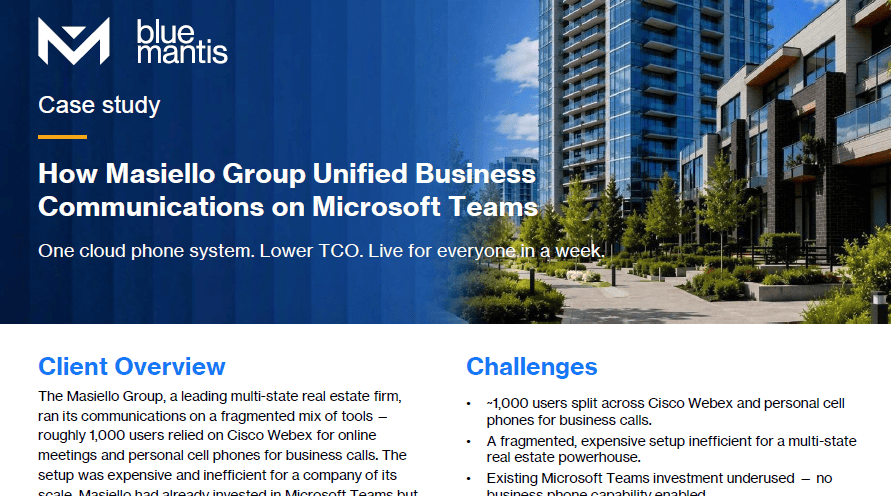
Case Study
Unify business communications with Microsoft Teams to reduce costs, simplify calling, improve productivity, and create a scalable communications platform.
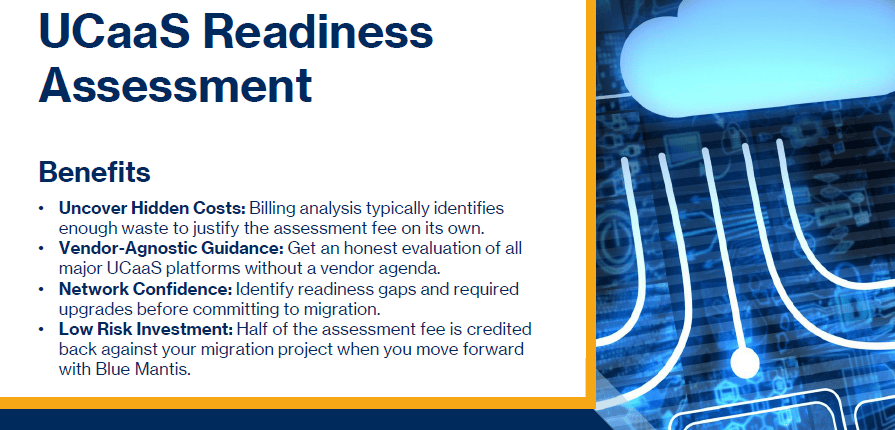
Assessment
Prepare for UCaaS migration with a vendor-agnostic assessment that uncovers costs, validates network readiness, reduces risk, and builds a clear modernization roadmap.